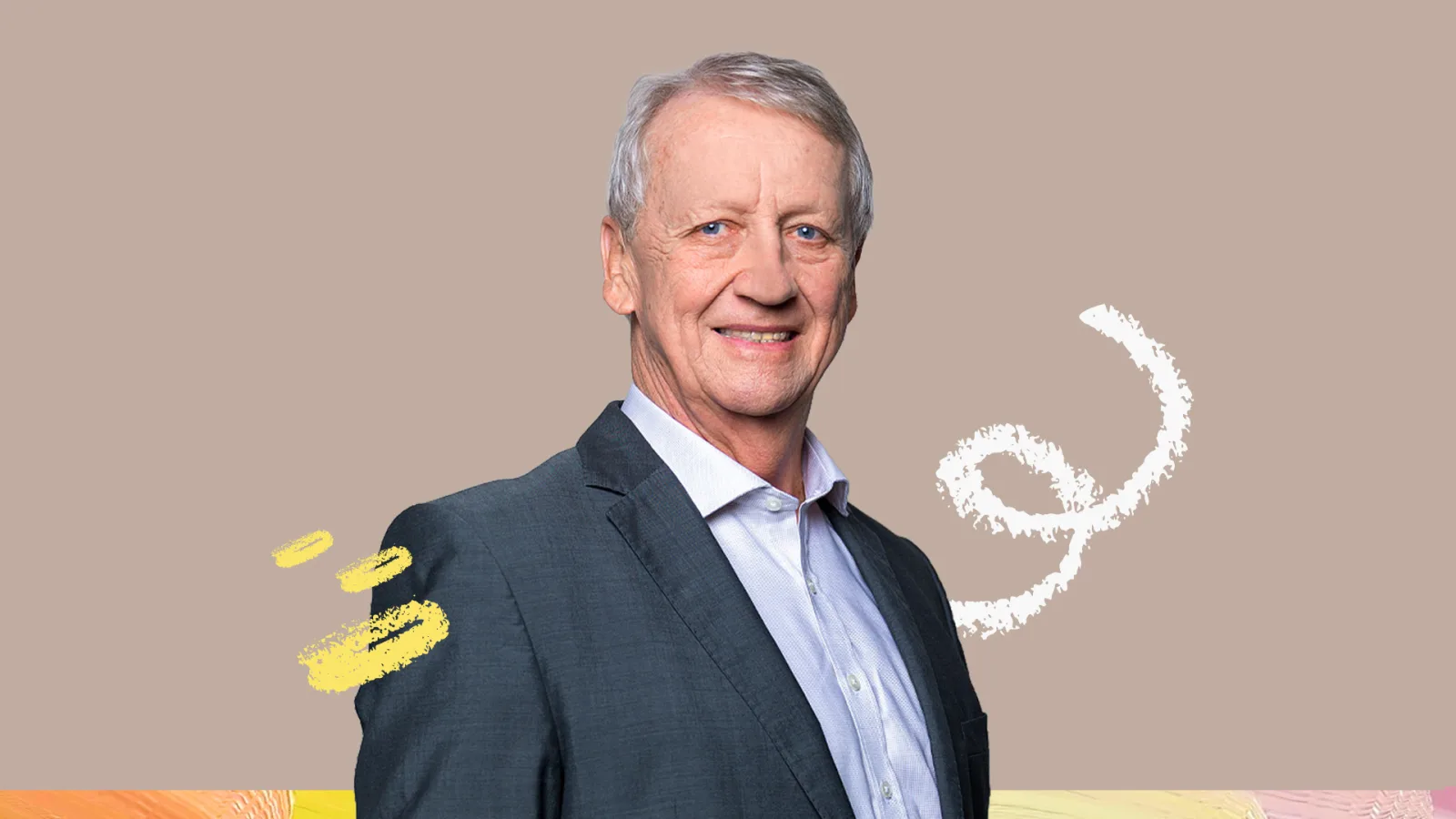
Dear Shareholders, I am pleased to share the results of a year that marks a decade since the amalgamation of GML Investissement Ltée and Ireland Blyth Limited, and ten years since IBL was listed on the Stock Exchange of Mauritius. Having become Chairman in 2013, a few years before the amalgamation, I have had the privilege of witnessing this transformation from close quarters, from where the Group stood then, to where it stands today.
Ten years of transformation
IBL’s history is closely intertwined with the development of Mauritius. From the 1970s onwards, as the country began to diversify beyond an economy centred on sugar, our original businesses invested in the sectors shaping this transformation, including hospitality in the 1980s, alongside manufacturing, distribution and other emerging activities, continually adapting their portfolio to the opportunities created by a changing economy.
The transformation of the Group over the past decade has been of a different magnitude. The 2016 amalgamation brought together two substantial portfolios and created a Group with greater scale and the breadth to pursue opportunities beyond Mauritius. What followed was not simply an expansion of the existing portfolio, but a fundamental change in the way IBL allocates capital, develops businesses and operates across markets.
The phase following the amalgamation was about putting the Group on stronger footing: clarifying where we could create value, rationalising parts of the portfolio, and looking beyond our traditional geographic base as the limits of the Mauritian market for our businesses became increasingly evident. Our initial presence in Nairobi in 2018 gave us an early understanding of East Africa, shaping the regional strategy we then formalised through Beyond Borders in 2021.
What has emerged is a Group that is materially different from the IBL of ten years ago. We have moved from predominantly operating in Mauritius to managing businesses across the Indian Ocean and East Africa, supported by the investment, M&A, legal and leadership capabilities required to manage a more complex international Group. Our regional businesses are no longer individual investments, but established businesses with their own scale, capabilities and growth opportunities. This combination of world-class governance, common operating standards, and local execution has become a defining strength of the Group.
IBL remains, above all, a Mauritian company. Our expansion into the region and our roots in Mauritius, are, in fact, mutually reinforcing: growth abroad has drawn on the expertise built here, while the perspectives and capabilities gained from operating across new markets are, in turn, bringing new opportunities for our other Mauritian businesses.
Performance in a challenging environment
FY2026 unfolded against considerable volatility. Disruptions to global supply chains, inflationary pressures and higher operating costs affected our markets, while the conflict in the Middle East and closure of the Strait of Hormuz added disruptions and uncertainty. In Mauritius, structural pressures, including constraints in the labour market, continued to affect businesses across several sectors.
Against this backdrop, the Group delivered a strong underlying performance, with growth across all four clusters, on the back of a strong contribution from our East African operations. Turnover increased by 13.2% to Rs 124.3 billion, operating profit rose by 13.7% to Rs 8.3 billion and Group EBITDA increased by 10.6% to Rs 14.0 billion.
This performance reflects the strength of the portfolio and the operational excellence being built within each of our businesses, with a diversified geographic and sectoral base providing resilience and driving growth in a difficult environment.
The Group’s transformation over recent years has required significant investment, including debt to fund our expansion beyond Mauritius. This has constrained our financial flexibility even as the investments have begun to contribute to earnings and broaden the Group’s growth platform. Conscious of the need to balance investment, deleveraging and shareholder returns, the Board has decided to increase the final dividend to Rs 0.63 per share, compared with Rs 0.56 in FY2025. Together with the interim dividend, total dividends for FY2026 amounted to Rs 0.85 per share, compared with Rs 0.76 in the previous year.
Despite the stronger underlying performance, the Group’s share price has remained disappointing. The market value of the Group does not, in our view, reflect the strength of the businesses we have built or the value created through the transformation. Addressing this disconnect, while continuing to strengthen the balance sheet, will remain an important focus for the Board.
Building scale where it matters
Disciplined portfolio management remained a key focus during the year as we continued to reshape the Group’s portfolio in line with our strategic priorities, whether by increasing ownership where greater control supports the next phase of development, or by combining activities where scale can create stronger platforms. The transactions completed during the year illustrate both approaches.
In sugar, Miwa Sugar became the sole shareholder of Sucrière des Mascareignes (SML) on 26 March 2026, completing the buyback of Tereos’ 40% stake and consolidating its ownership of SML’s sugarcane growing and milling operations in Tanzania and sugarcane milling activities in Kenya.
On 30 March 2026, Bloomage made a voluntary Public Offer to acquire all the shares of BlueLife Ltd, with a view to consolidating IBL’s real estate activities. At the date of this report, Bloomage holds some 82.7% of the shares of BlueLife.
On 31 July 2026, the French Competition Authority approved the joint-control contribution of shares of Caillé Group’s subsidiary Caillé Grande Distribution, and IBL’s subsidiary Make Distribution, which respectively operate 50 supermarkets under the Leader Price brand and four hypermarkets under the Run Market brand. The transaction, which would create a stronger, more diversified food retail network of 54 stores in Réunion, remains subject to conditions precedent and completion.
At PBL, the shareholder structure was also simplified in July 2026, merging Camp Investment Company Ltd and Phoenix Investment Company Ltd with and into PBL, providing a simpler structure to support the regional growth already underway. In Réunion, that growth deepened from 1 October 2026, when Edena S.A. began Coca-Cola production and distribution. PBL now operates from three established regional hubs - Mauritius, Seychelles and Réunion - each building toward the same standard of local presence and operational capability.
Sustainability and long-term resilience
Sustainability is part of how we assess the resilience of our businesses, with climate resilience, energy security and resource efficiency more closely integrated into business planning and investment decisions. Recent geopolitical developments have reinforced the importance of reducing exposure to energy shortage and price volatility.
The progress of our solar farms reflects this direction, with ENEYA Energy working with businesses across the Group and bringing technical expertise to develop renewable energy capacity. The Seabrew Solar Farm project is being developed by a consortium of IBL companies comprising Phoenix Beverages, Froid des Mascareignes and Marine Biotechnology Products, while Basalt Solar is being developed with UBP. Both are being advanced under the Carbon Neutral Industrial Scheme (CNIS) national scheme, with the energy generated expected to serve the participating businesses and provide tariff benefits. Along with other initiatives across our Agri & Energy activities (Performance report on page 84), they are strengthening the Group’s energy resilience while contributing to Mauritius’ transition towards renewable energy, a key national priority.
We are also becoming more focused on the issues that are material across the Group, with materiality assessments during the year identifying four common priorities: Climate & Energy, Materials & Waste, Rights & Wellbeing at Work, and Rights & Resilience in Communities. This provides a clearer basis for directing efforts towards issues where Group-wide action can have greater relevance and impact. The renewed direction of Fondation Joseph Lagesse is also part of this broader approach.
At Board level, the Corporate Sustainability Committee, chaired by George Desvaux, provides oversight of the Group’s sustainability agenda. During the year, Directors also took part in a dedicated sustainability training programme to strengthen the Board’s ability to take this agenda forward.
Governance and leadership for the next phase
As IBL has grown in scale and become more decentralised, the role of governance has evolved to ensure that greater autonomy is matched by clear accountability, appropriate oversight and disciplined risk management. This allows our businesses to respond to their markets while operating within a consistent Group framework.
During the year, we strengthened leadership across several parts of the portfolio, with three Group Heads of Operations reporting directly to the Deputy Group CEO and overseeing defined groups of activities. This structure gives the Group a stronger layer of operational oversight across related businesses, bringing more coordination to their activities, and creating greater scope to share expertise and opportunities across them.
Going forward, the depth and experience of our leadership team will be critical in carrying the culture of excellence we are building across the Group.
Looking ahead
Having built a stronger regional platform, established clearer strategic priorities and developed the capabilities required to operate at greater scale, the task over the next two to three years will be to realise the growth potential within the businesses we have built, strengthen operational excellence across the Group, and convert that potential into stronger EBITDA generation.
While our clusters have shown a high degree of operational resilience, the operating environment is and will remain demanding. Geopolitical developments, supply disruptions and inflationary pressures will require very close attention, while artificial intelligence is reshaping business models and creating new opportunities. These changes make it even more important to continue learning, adapting and investing with purpose to create virtuous cycles of inclusive development wherever we operate.
Acknowledgements
Looking back at the decade, I am proud of the transformation the Group has undertaken and of the people and capabilities that have made this possible. The journey has involved difficult and bold decisions, some setbacks and important lessons to be retained, but each has contributed to building a stronger and more focused organisation.
I would like to thank my fellow Board members for their continued engagement and guidance, and our Group CEO, Arnaud Lagesse, for his leadership and commitment to the Group’s development. I also extend my appreciation to our Deputy Group CEO, Patrice Robert, and to the wider leadership team for their decisive contribution to strengthening IBL’s capabilities, preparing and reshaping the Group for the future.
Finally, I would like to thank our team members working across Mauritius, East Africa, the Indian Ocean, and elsewhere. Their commitment, professionalism and sense of ownership remain central to IBL’s ability to grow, adapt and create value for our shareholders and the wider communities in which we operate.
As we enter the next decade, our direction is clear. We will continue to build on the foundations established over the past ten years, with a more focused portfolio, a stronger regional presence and an organisation increasingly equipped to deliver sustainable long-term value.
Jan Boullé
Chairman